Solid-State Diesel Spray Foam Rig
Diesel-powered mobile polyurethane processing system engineered for production contractors who need consistent performance across varying jobsite conditions.
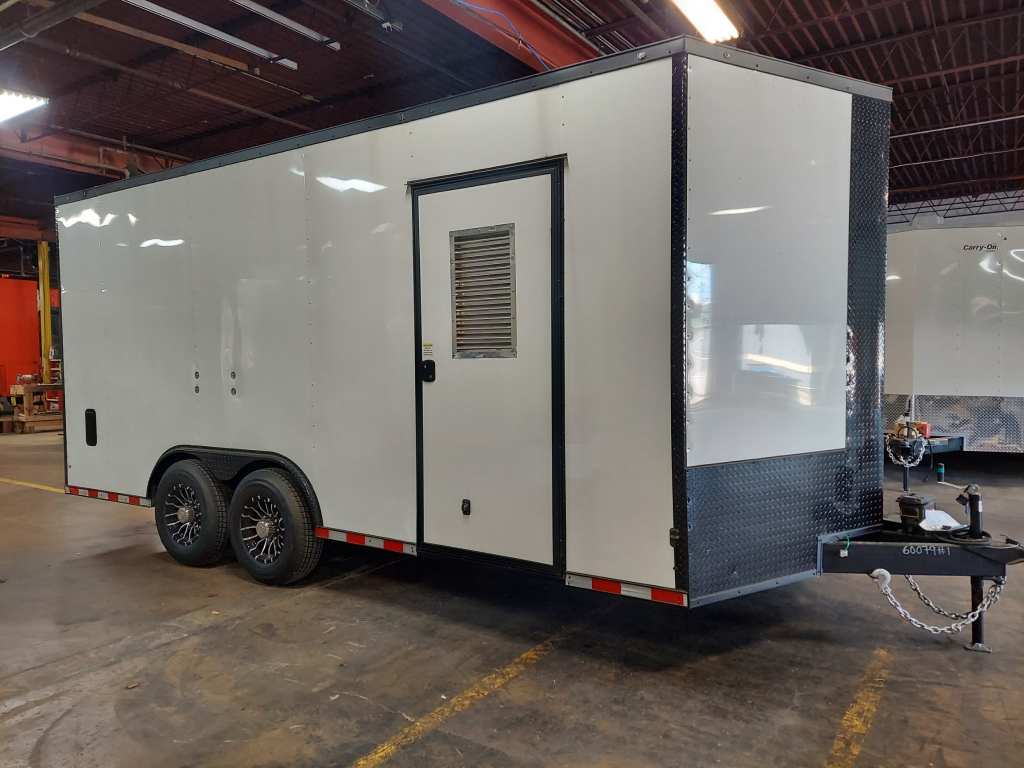
Mobile Polyurethane Processing — Diesel Platform
This solid-state diesel spray foam rig is a turnkey polyurethane processing platform built for contractors who need reliable production performance across residential, commercial, and multi-jobsite environments.
The diesel platform uses a Tier-4 diesel generator providing stable electrical power for heater systems and machine drive. The 18-ft V-nose trailer allows two full sets of chemical drums, supporting extended production without drum changeover interruption.
Machine options on this platform include hydraulic and electric drive proportioners, allowing contractors to select the system that best matches their hose length requirements, heater wattage needs, and production environment.
18-Foot V-Nose Trailer
| Trailer | 18-ft V-nose enclosed trailer |
| GVWR | 14,000 lb torsion axle trailer |
| Hitch | 2-5/16 ball hitch |
| Tongue | Electric tongue jack |
| Ramp Door | Included |
| Pass-Through | Hose pass-through doggy door |
| Walls | Polycore composite panels |
| Floor | Full polyurea coated floor |
| Drum Capacity | Two full sets of chemical drums |
Base Machine & Machine Options
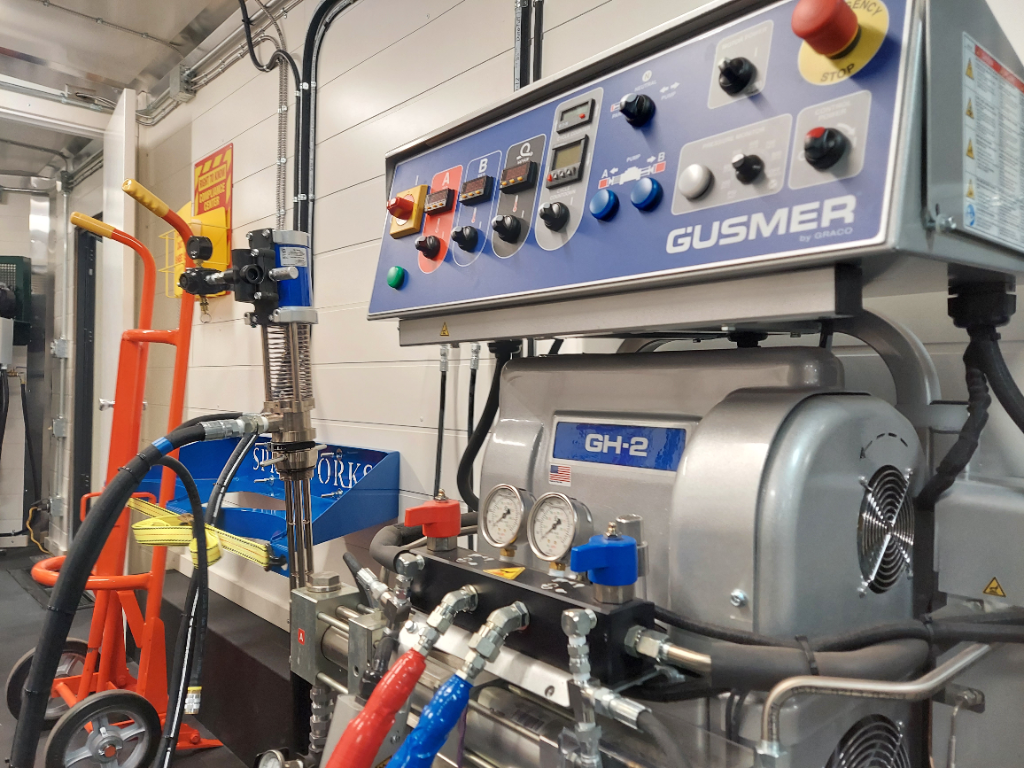
The base solid-state rig ships with the Gusmer G2 hydraulic proportioner. Multiple machine upgrades are available depending on output requirements, hose length, and heater wattage needs.
| Base Machine | Gusmer G2 Hydraulic Proportioner |
| Output | ~28 lb/min |
| Drive Type | Hydraulic — maintains consistent 1:1 ratio |
| Heated Hose | 210 ft heated hose package |
| Spray Gun | Graco Fusion PC |
| Gun Package | #01 tip, #02 mixing chamber, flush kit, rebuild kit |
| Transfer Pumps | (2) T3 transfer pumps with regulators |
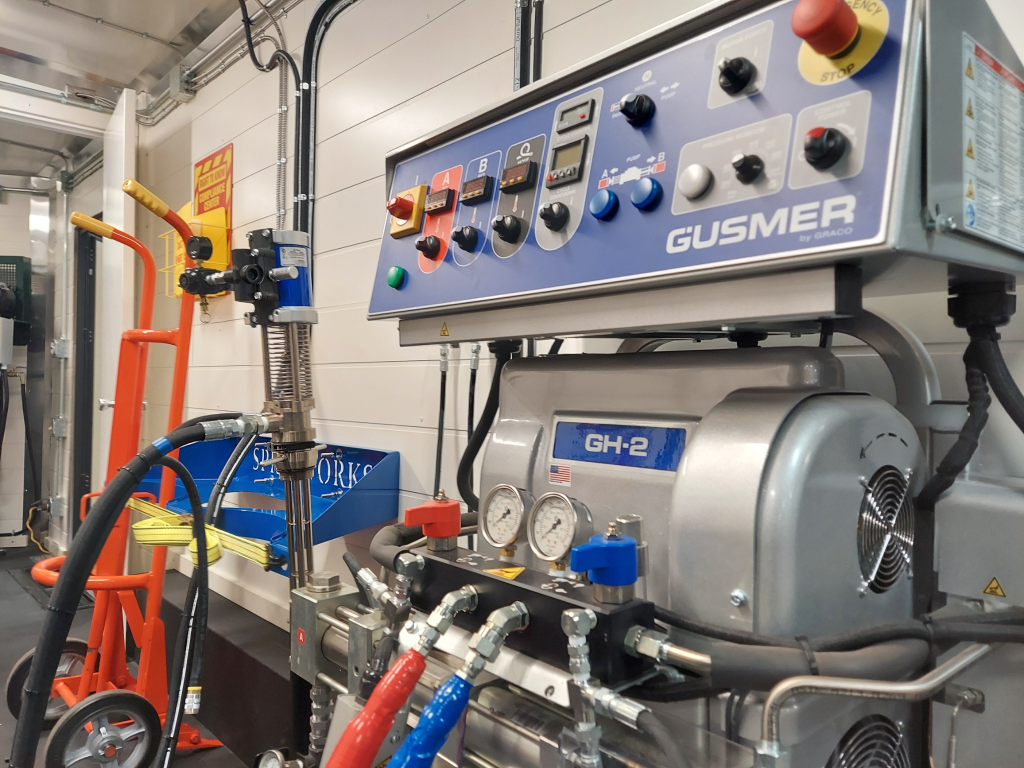
This platform supports multiple machine upgrades including PMC PH-2, PH-25, PH-40, Gusmer G4, and PMC PH-55 hydraulic proportioners. Higher output machines support longer hose systems and larger production volumes. Machine selection affects generator requirements and hose capability — these systems must be properly matched.
Solid-state proportioners also include electronic production safeguards designed to protect spray operations and prevent off-ratio foam.
Solid-state machines monitor pressure balance between the A-side and B-side chemical systems. If the system detects a sustained imbalance beyond the allowable range, the machine automatically shuts down to prevent off-ratio spraying. Typical shutdown thresholds occur at approximately 300 PSI difference between A and B pressures.
Solid-state machines also include a cycle counter that tracks pump cycles based on the material volume loaded into the drums. Operators can preset the machine to stop spraying before the drums run empty, typically 5–10 gallons before depletion. This prevents drawing air into the system and helps maintain proper material ratio during production.
This rig includes a dedicated wall-mounted material recirculation block, allowing operators to connect the hose assembly and circulate chemicals through the proportioner and back to the supply drums without spraying.
Recirculation is commonly used to condition materials and stabilize system temperature and pressure before spraying, but it also plays an important role in maintaining equipment between jobs.
In field practice, circulating materials periodically when a rig sits idle helps prevent isocyanate crystallization and buildup within hoses, pumps, and plumbing components. Without occasional circulation, material can remain stagnant in the system for extended periods, which increases the likelihood of restriction or component fouling over time.
The recirculation block allows operators to quickly connect the hose assembly to the manifold and circulate material through the system as part of routine rig maintenance and startup procedures.
Complete Equipment Package
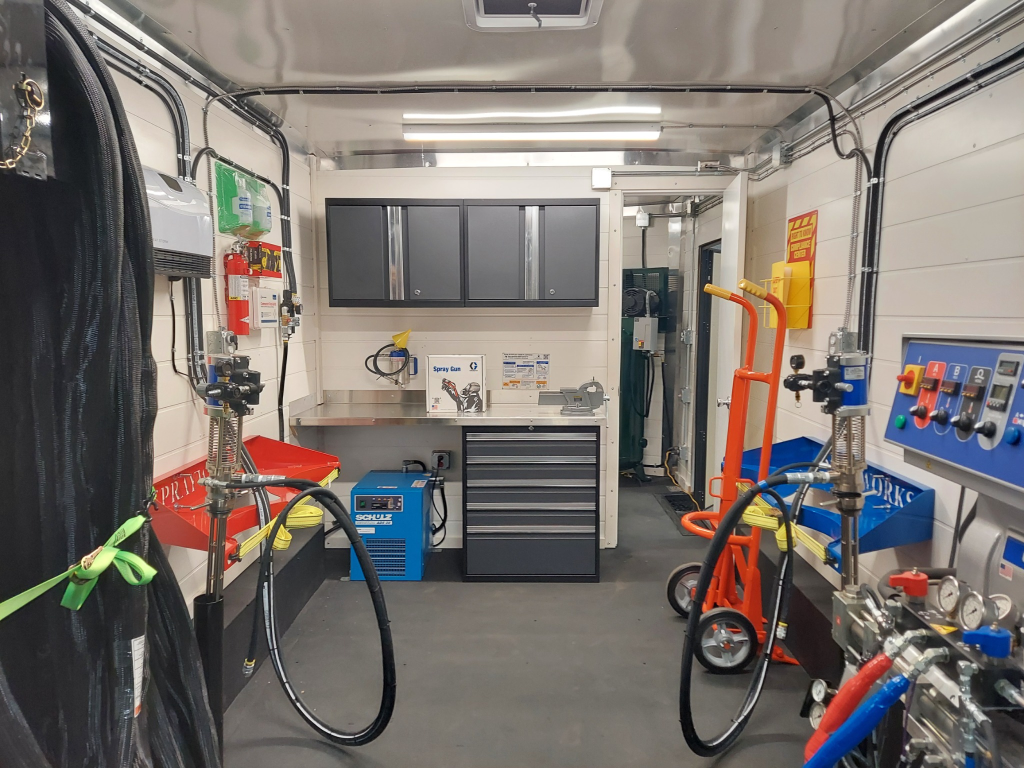
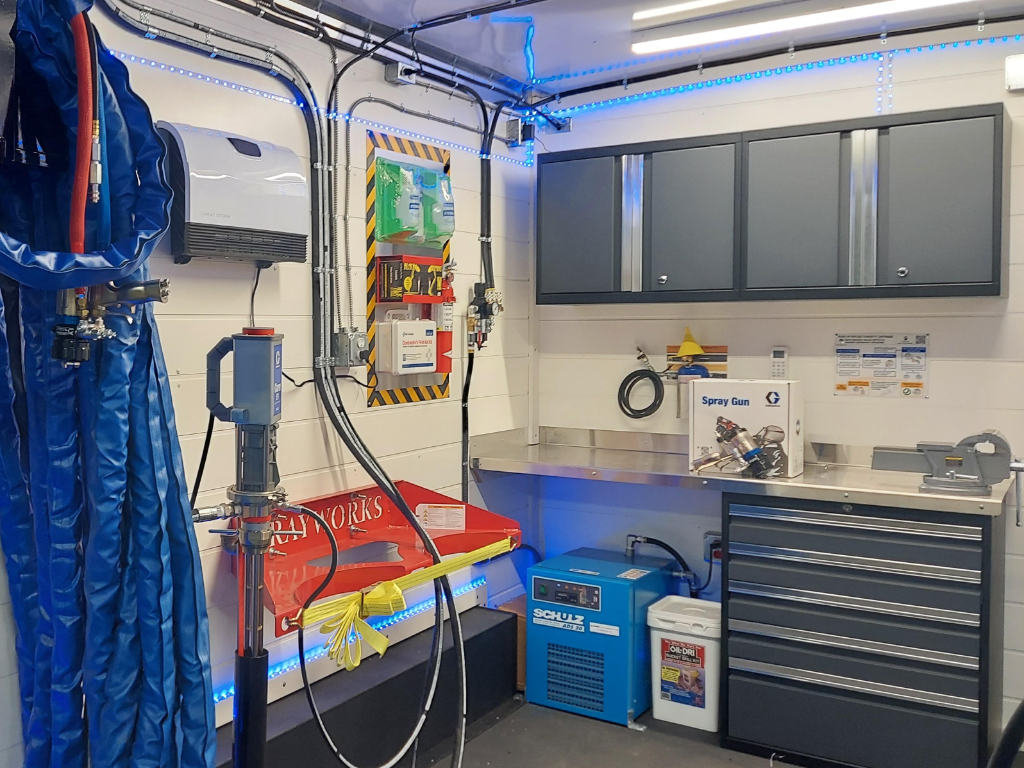
- ▶Lockable cabinets
- ▶Stainless steel countertop
- ▶Lockable toolbox storage
- ▶Hose rack
- ▶Overhead lighting
- ▶Wall mount heater
- ▶Desiccant dryers
- ▶Pour-over spouts
- ▶Drum racks
- ▶Pump tube holders
- ▶Drum dolly & wrench
- ▶Spill containment kit
- ▶Two-worker fresh air supply system
- ▶Half mask respirators
- ▶Disposable coveralls & gloves
- ▶Eyewash station
- ▶Fire extinguisher & first aid kit
- ▶SDS station
Diesel Engine & Air Compressor Assembly
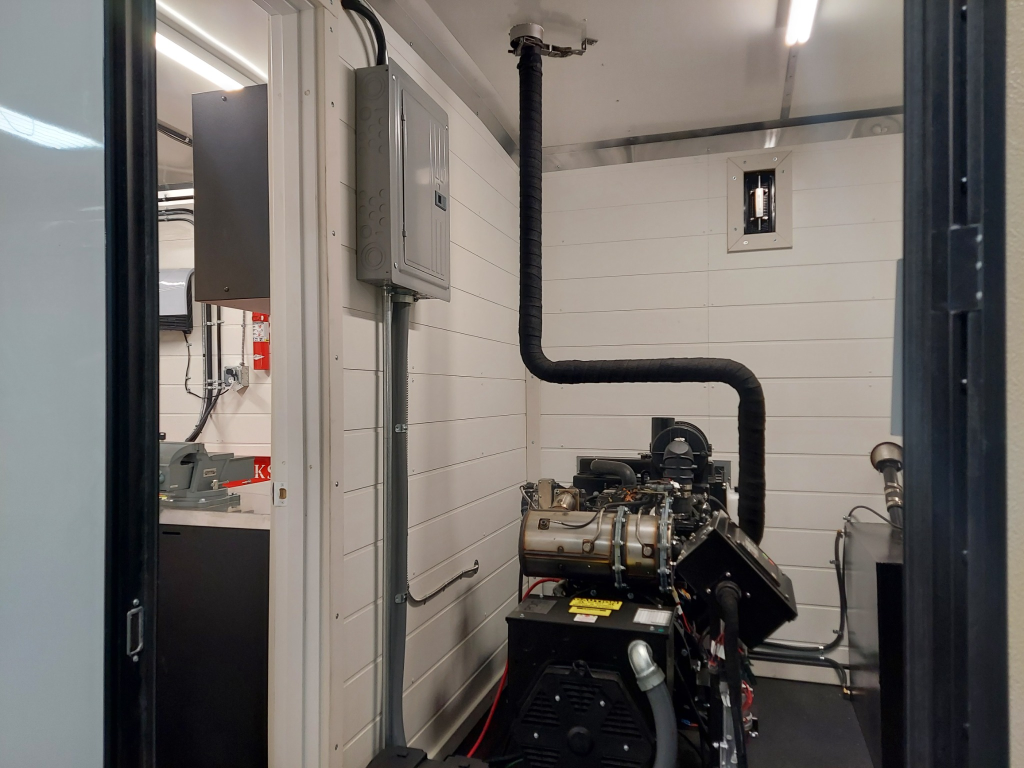
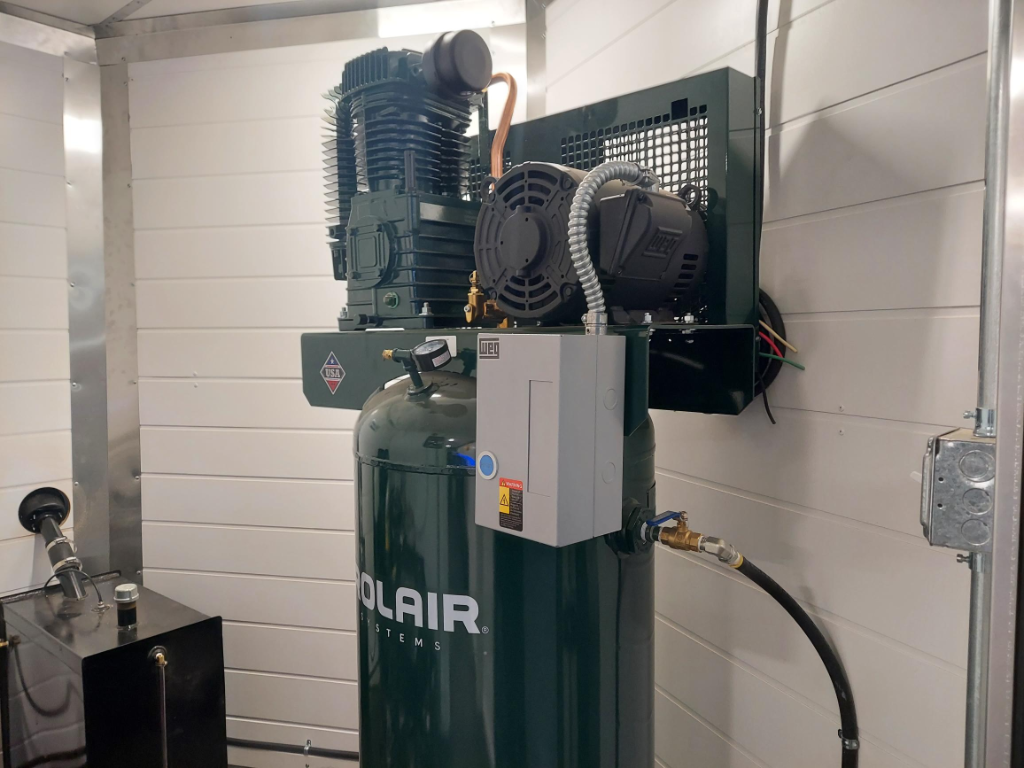
| Generator | 30 kW Tier-4 diesel |
| Compliance | EPA Tier-4 emissions compliant |
| Compressor | 5 HP air compressor |
| Air Drying | Refrigerated air dryer |
| Air System | Air filtration and manifold system |
| Fuel Tank | Separate generator fuel tank, driver-side fill |
Generator, Heater & Hose System
Professional Service Workspace
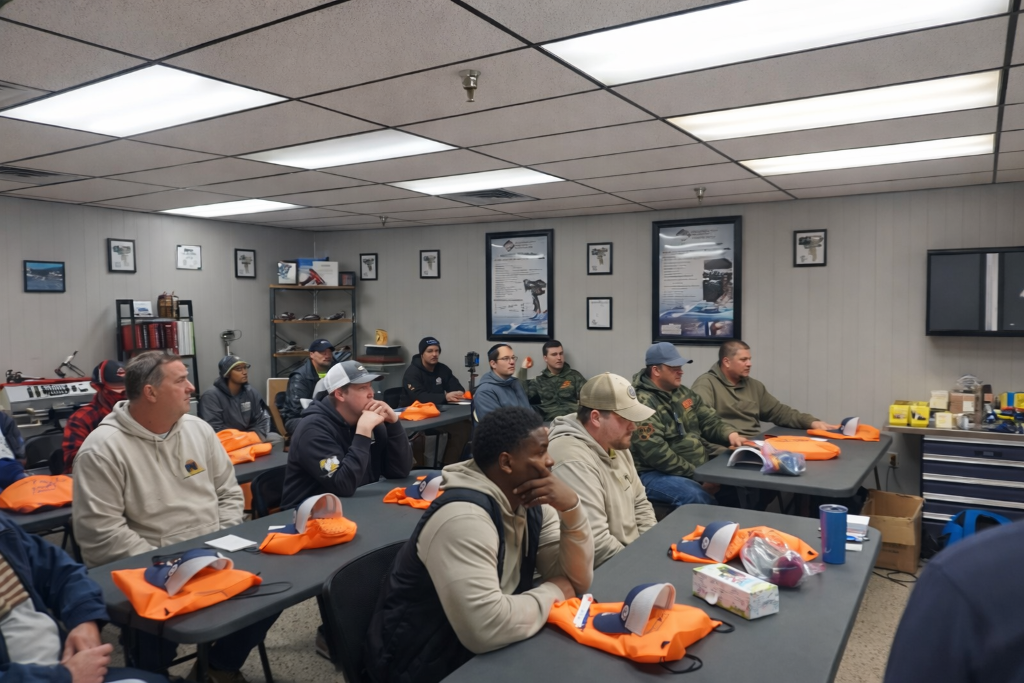
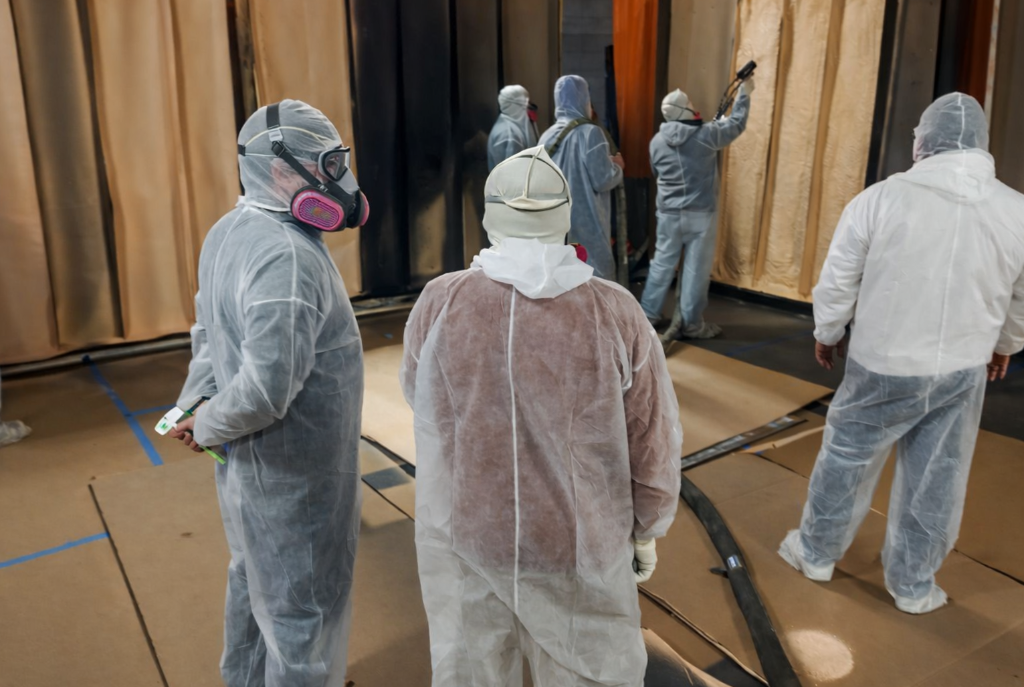
Every rig includes hands-on training covering foam materials & densities, estimating & yield calculations, equipment operation, spray gun maintenance, troubleshooting procedures, and manufacturer spec sheet review.
System Investment
We work with multiple spray foam manufacturers.
Because manufacturers maintain regional warehouses across the United States, contractors can typically receive material shipments quickly regardless of location.
In many cases:
- • Orders placed before noon ship same day
- • Material may arrive next business day
- ▸Gusmer G2 Hydraulic Proportioner
- ▸30 kW Tier-4 Diesel Generator
- ▸5 HP Air Compressor
- ▸210 ft Heated Hose & Whip
- ▸Fusion PC Spray Gun
- ▸Full Safety & PPE Package
- ▸Professional Training Included
Temperate Climate (Zones 4-5)
Recommended minimum insulation levels based on IECC wall requirements.
Recommended for temperate climate (zones 4-5):
- ▶2" ≈ R-13 to 14
- ▶3" ≈ R-19 to 21
- ▶3.5" ≈ R-22 to 25
Recommended for temperate climate (zones 4-5):
- ▶3.5" ≈ R-13 to 14
- ▶5.5" ≈ R-19 to 22
- ▶7" ≈ R-24 to 28
Foam Yield & Material Estimator
Estimate board feet, material sets, approximate insulation performance, and project material cost based on square footage and spray thickness.
Calculated using closed-cell foam yield range of 4,000–4,500 board feet per set and material cost of $2,500–$2,800 per set. Actual yield and cost vary by material brand, substrate, and conditions. Always add overage for waste and transitions.
Results vary based on job complexity, regional pricing, production efficiency, and consistent rig deployment.
Want to Compare Rigs?
Not sure which platform fits your operation? Explore the other rig systems side by side or view the full comparison.