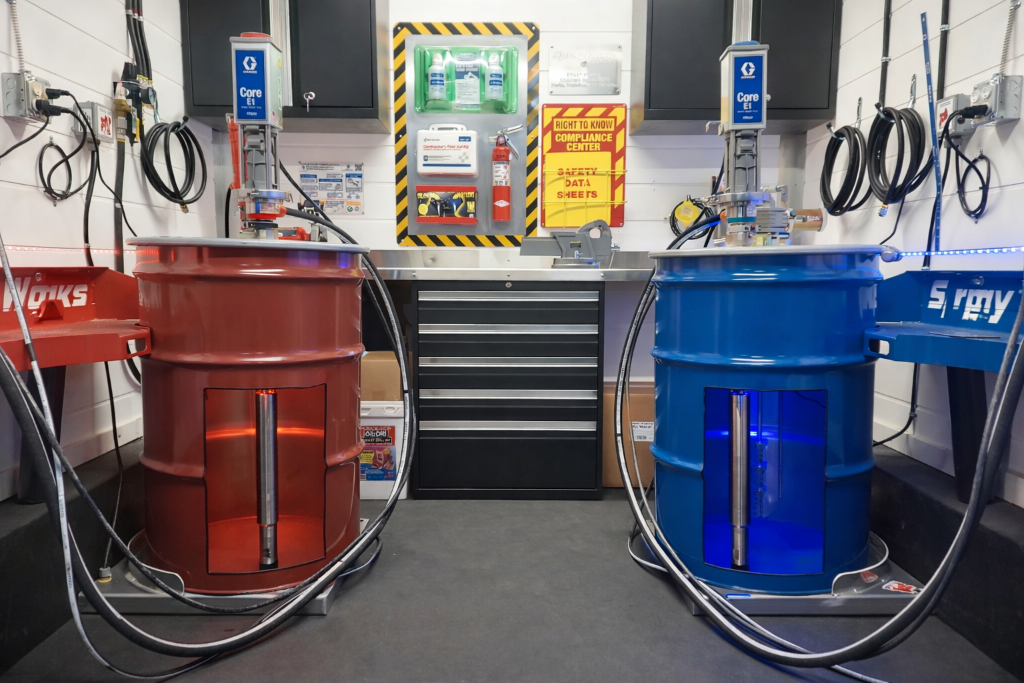
Spray Foam Systems: Material, Processing & Application
Spray polyurethane foam is not a product that is installed.
It is a material that is manufactured in real time at the spray gun.
The performance of that material is not determined by what is in the drum — it is determined by how the system processes and delivers those materials through pressure, temperature, and mixing.
To understand spray foam, you have to understand the system.
The Three Parts of a Spray Foam System
Every spray foam system operates through three connected stages:
- Material
- Processing
- Application
If any one of these stages falls outside of its operating range, the foam that is produced at the gun will change.
Material — What's in the Drum
Spray foam is created from two separate liquid components:
- A-side (isocyanate)
- B-side (resin blend)
Each side has its own chemical behavior, storage requirements, and sensitivity to temperature and contamination.
The material inside the drum does not determine final foam performance on its own — it only defines the potential.
Processing — What the Equipment Does
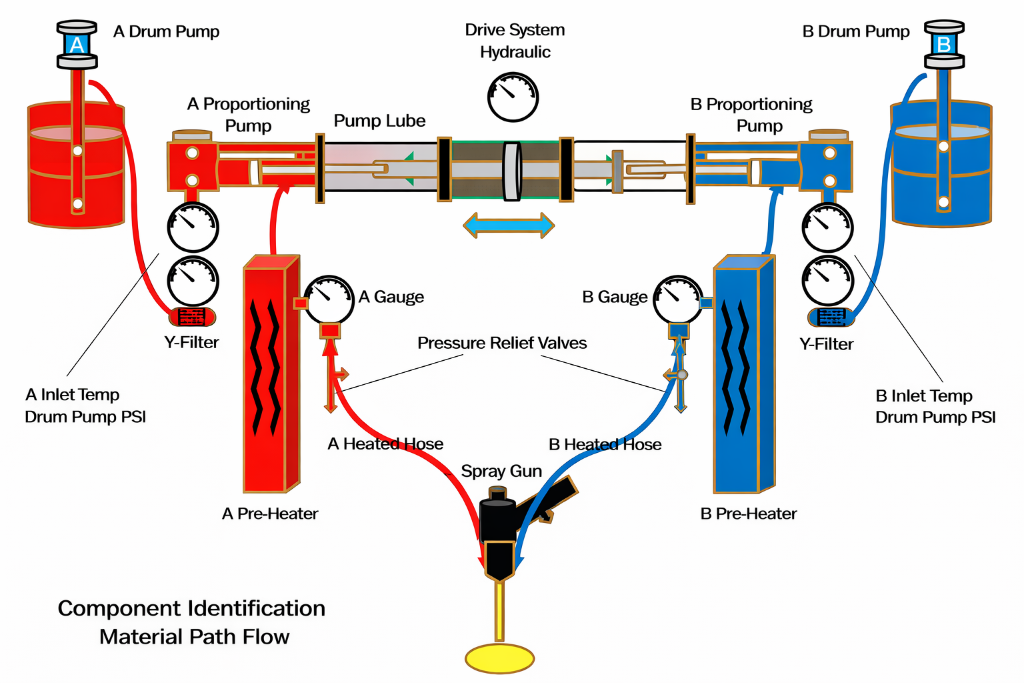
Before the material reaches the spray gun, it is conditioned and controlled by the equipment system:
- Drum transfer pumps move material out of the containers
- Pre-heaters bring materials into a usable temperature range
- The proportioner pressurizes and balances both sides
- Heated hoses maintain temperature to the gun
This stage is where most performance problems begin. If temperature or pressure drifts, the material arriving at the gun is no longer in the correct processing window.
Application — Where Foam Is Created
The spray gun is where everything comes together. This is the point where:
- A and B meet
- Mixing occurs
- The chemical reaction begins
- Foam structure is formed
This moment is often misunderstood.
You are not applying foam.
You are creating foam at the exact moment it leaves the gun.
Why This Matters
Foam quality is not controlled by a single setting.
It is the result of the entire system working within a narrow operating window. When that window shifts, the foam changes:
- Density
- Cell structure
- Adhesion
- Yield
- Surface texture
Understanding the system is what allows you to recognize, correct, and prevent those changes.
Where Most Problems Start
Most spray foam issues are not material failures. They are system failures.
Common causes include:
- Improper material temperature
- Pressure imbalance between A and B
- Poor hose temperature control
- Inconsistent startup conditions
- Spraying outside of the processing window
These issues do not show up in the drum.
They show up in the foam.
Next: Sprayability & Pattern Development
The next chapter covers how system conditions show up at the gun — spray pattern is the first visible indicator of whether you're inside or outside the spray foam processing window.
Continue to Chapter 2Ready to Get Started?
Contact us to discuss your rig requirements.