Portable Mobile Processing Plant Systems
Self-contained spray polyurethane processing platforms designed for controlled environments.
Portable mobile processing plant systems are self-contained spray polyurethane processing platforms designed for use in controlled environments.
These systems provide the core equipment required to process and apply spray foam materials without being integrated into an enclosed trailer or vehicle platform.
A portable processing plant typically includes a proportioner, transfer or drum pump systems, air supply components, heated hose package, spray gun, and supporting equipment mounted within a structural frame.
These systems do not provide environmental control. Unlike enclosed spray foam rigs, they do not regulate temperature, humidity, or material storage conditions. System performance is dependent on the environment in which the equipment is operated.
The operator is responsible for maintaining proper material temperature, ambient conditions, moisture control, and stable power supply.
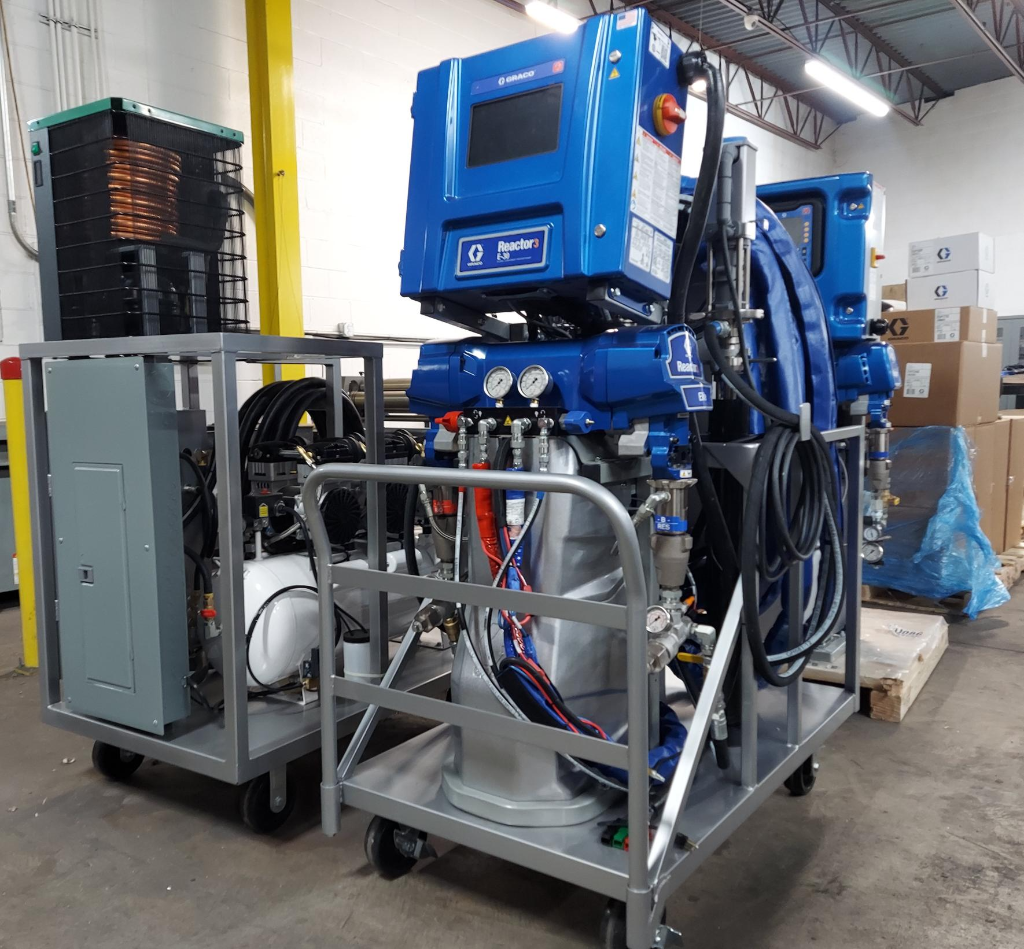
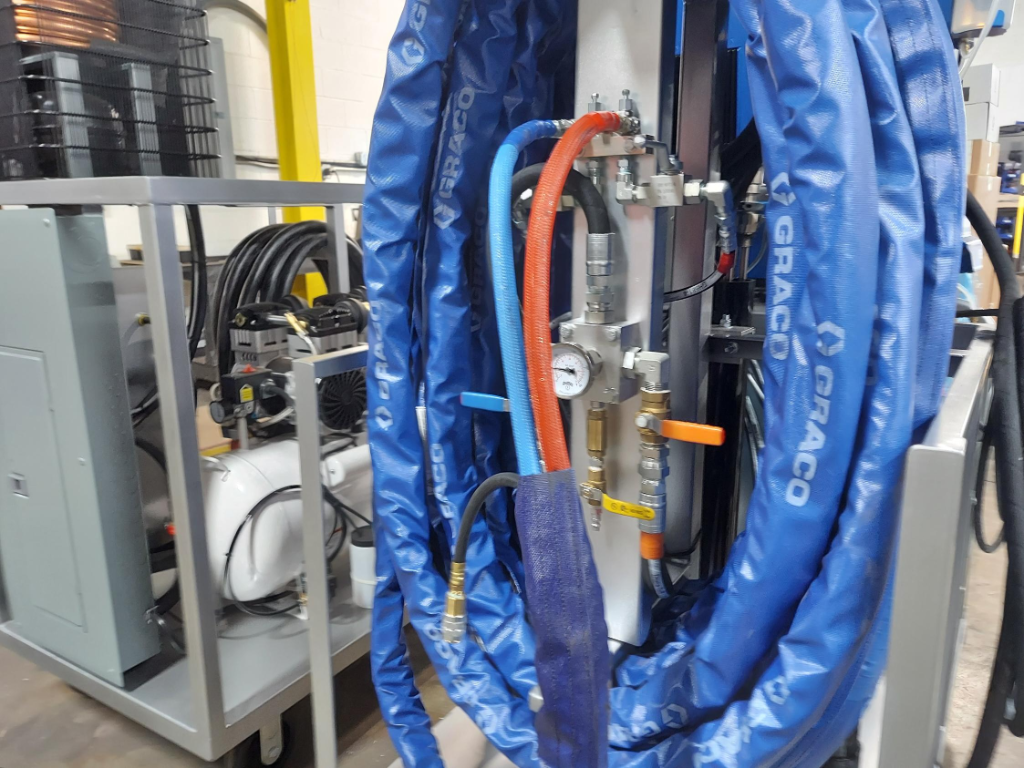
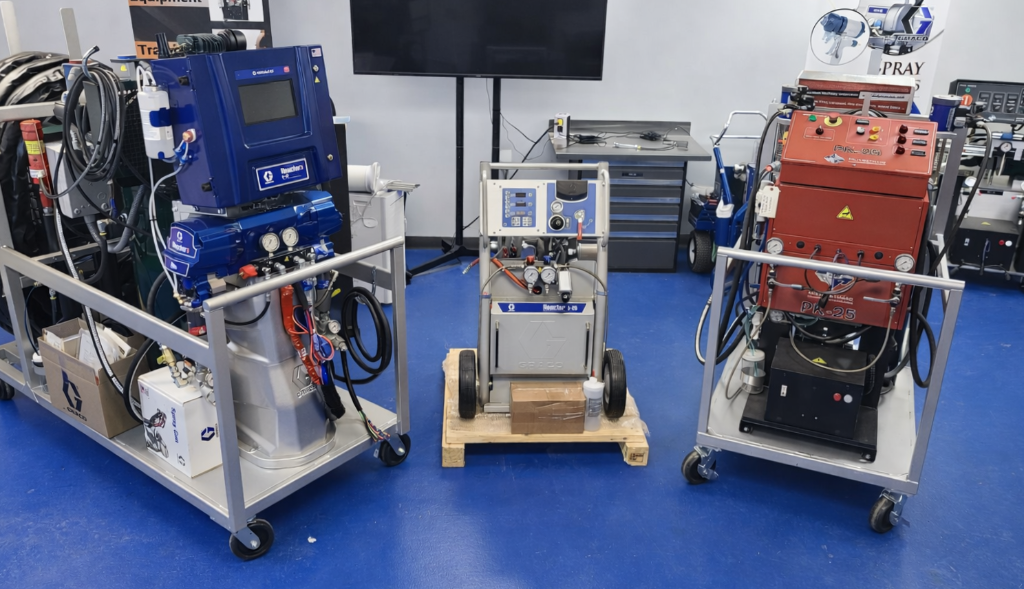
Power and air requirements vary based on system configuration. These systems are commonly configured for single-phase power, allowing operation from shore power or portable generators depending on the setup.
Require significant compressed air supply and may approach or exceed 100 amps when paired with single-phase electric compressors. These systems are often paired with gas-powered compressors or engine-driven units.
Reduce air demand and can typically operate with smaller compressors, often around 5 HP, resulting in more manageable system requirements.
Shift demand toward electrical supply. E-20 systems may operate with moderate air requirements, while E-30 Elite configurations utilize electric drum pumps, reducing air demand and allowing smaller onboard compressors, typically around 3 HP.
Shop environments, warehouses, controlled jobsite conditions, or custom rig builds where environmental conditions can be managed.
These systems are not intended for uncontrolled environments where temperature, moisture, and material conditions cannot be maintained.
Temperate Climate (Zones 4-5)
Recommended minimum insulation levels based on IECC wall requirements.
Recommended for temperate climate (zones 4-5):
- ▶2" ≈ R-13 to 14
- ▶3" ≈ R-19 to 21
- ▶3.5" ≈ R-22 to 25
Recommended for temperate climate (zones 4-5):
- ▶3.5" ≈ R-13 to 14
- ▶5.5" ≈ R-19 to 22
- ▶7" ≈ R-24 to 28
Foam Yield & Material Estimator
Estimate board feet, material sets, approximate insulation performance, and project material cost based on square footage and spray thickness.
Calculated using closed-cell foam yield range of 4,000–4,500 board feet per set and material cost of $2,500–$2,800 per set. Actual yield and cost vary by material brand, substrate, and conditions. Always add overage for waste and transitions.
Results vary based on job complexity, regional pricing, production efficiency, and consistent rig deployment.