Spray Foam Material Conditioning: Temperature, Pressure, and Control
Spray foam performance is not controlled at the gun.
It is controlled before the material ever reaches it.
Material conditioning is the process of bringing both components into a stable, usable state so they can mix, atomize, and react correctly.
If conditioning is wrong, everything downstream will be wrong.
What Material Conditioning Means
Material conditioning is the control of:
- Temperature
- Pressure
- Material consistency
From the drum to the gun. It ensures that both A-side and B-side arrive at the spray gun:
- At the correct temperature
- At the correct pressure
- In a consistent, predictable state
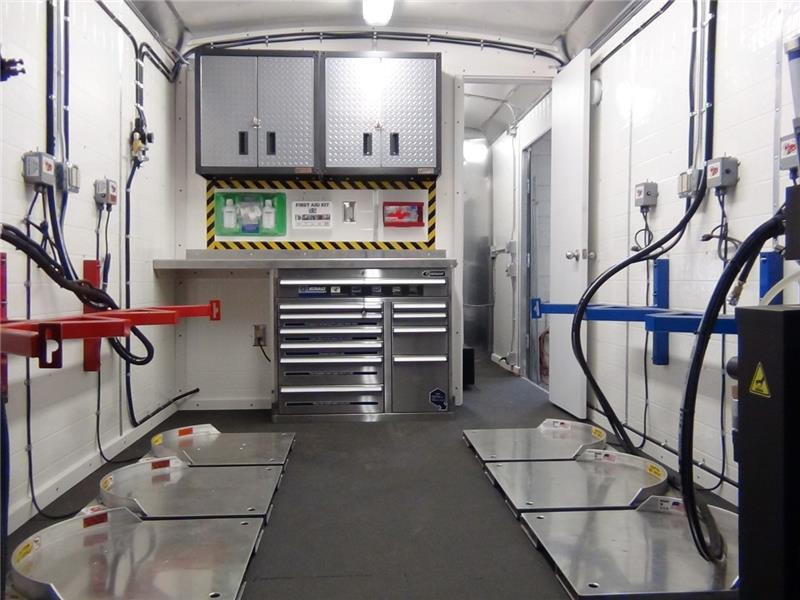
Material conditioning begins at the source. The rig interior is organized around stable drum positioning, hose routing, and heat management — all of which directly affect how material arrives at the gun.
Cold Material and System Failure
Cold material is the most common cause of spray foam system instability.
As temperature drops:
- Material viscosity increases
- Transfer pumps struggle to maintain flow
- Pressure becomes inconsistent
- Ratio begins to drift
- The system may shut down or produce off-ratio foam
These issues do not occur in isolation. They cascade through the entire system.
A single drop in material temperature can lead to:
- Poor material delivery
- Pressure imbalance
- Spray pattern breakdown
- Incorrect foam formation
Heating at the Source
Material must be brought into a usable range before it reaches the proportioner. Heating only at the machine is not enough.
If material enters the system too cold:
- Pre-heaters are overloaded
- Hose temperature becomes unstable
- The system struggles to recover
Proper conditioning starts at the point where the material is drawn from.
Temperature Control
Temperature is the most influential variable in spray foam processing. It directly affects:
- Viscosity
- Mixing behavior
- Atomization quality
- Reaction speed
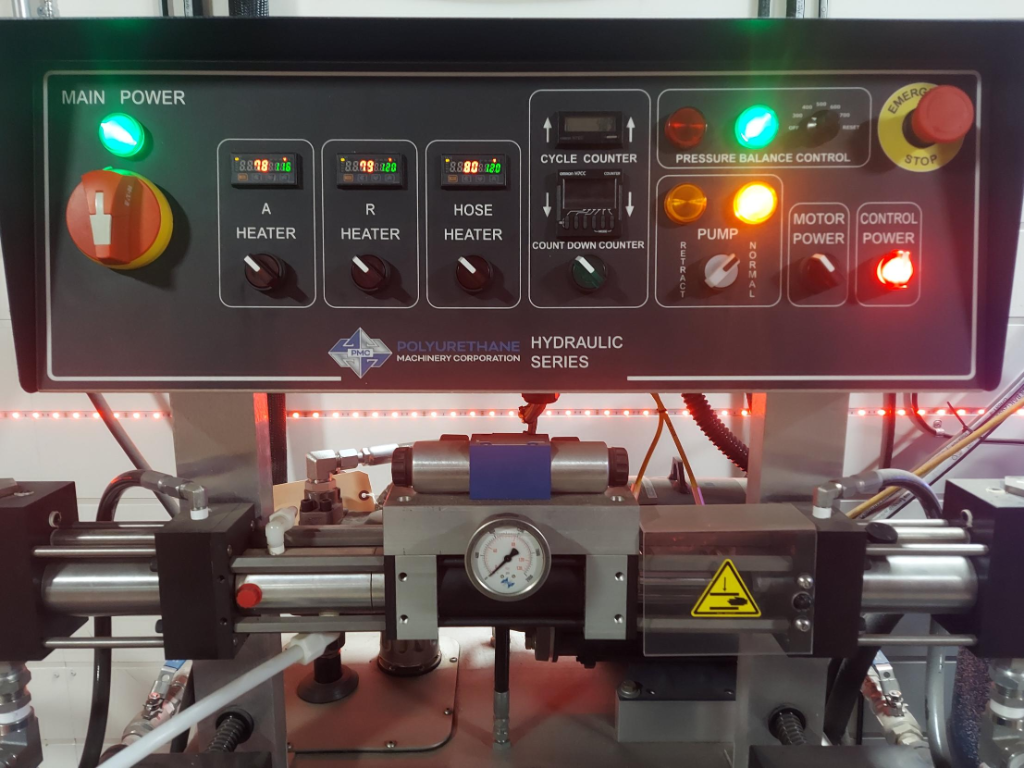
System temperature settings control material behavior at the gun and directly influence spray pattern, reaction speed, and foam structure.
Where Temperature Is Controlled
Temperature is managed in multiple locations:
- Drum temperature (material storage condition)
- Pre-heaters (initial conditioning)
- Heated hoses (temperature maintenance)
- Hose-end temperature (what actually reaches the gun)
The number that matters most is the temperature at the gun.
Temperature Relationships
Temperature is not a single setting. It is a relationship between:
- Drum temperature
- Pre-heater setting
- Hose temperature
- Ambient conditions
Changes in one will affect the others.
Pressure Control
Pressure controls how material moves and mixes. It affects:
- Flow rate
- Balance between A and B
- Mixing energy at the gun
Balanced Pressure
Both sides must remain balanced. If pressure drifts:
- Ratio changes
- Mixing becomes inconsistent
- Foam structure is affected
Pressure imbalance is not always visible immediately — but it is always present in the foam.
Material Behavior (What the System Is Fighting)
Spray foam materials are not static. They change with:
- Temperature
- Time
- Storage conditions
Cold Material Behavior
- ✗ Higher viscosity
- ✗ Poor atomization
- ✗ Larger droplets
- ✗ Slower reaction
Hot Material Behavior
- ✗ Lower viscosity
- ✗ Finer atomization
- ✗ Faster reaction
- ✗ Increased sensitivity
Conditioning vs Sprayability
Material conditioning and sprayability are directly connected.
Conditioning
= Input
Sprayability
= Output
If conditioning is correct
- ✓ Pattern stabilizes
- ✓ Mixing improves
- ✓ Foam forms consistently
If conditioning is incorrect
- ✗ Pattern breaks down
- ✗ Reaction becomes unpredictable
- ✗ Foam quality suffers
Where Most Operators Go Wrong
Most problems come from trying to fix the output instead of the input.
Common mistakes:
- ✗ Adjusting technique instead of temperature
- ✗ Ignoring hose-end temperature
- ✗ Not allowing the system to stabilize
- ✗ Chasing pattern without understanding conditioning
Stabilization Matters
Spray foam systems do not respond instantly. After adjustments:
- Temperature must equalize
- Hose must come up to setpoint
- Material must stabilize
Making rapid changes without stabilization leads to inconsistent results.
What Proper Conditioning Looks Like
When conditioning is correct:
- ✓ Material flows consistently
- ✓ Temperature is stable at the gun
- ✓ Pressure remains balanced
- ✓ Spray pattern stabilizes quickly
This is the foundation of repeatable foam performance.
Next: Reaction and Foam Formation
Once material is properly conditioned and delivered, the next step is understanding how the foam forms and reacts after leaving the gun.
Ready to Get Started?
Contact us to discuss your rig requirements.