Spray Foam Rig Floors: Why Rubber Flooring Fails and Causes Subfloor Rot
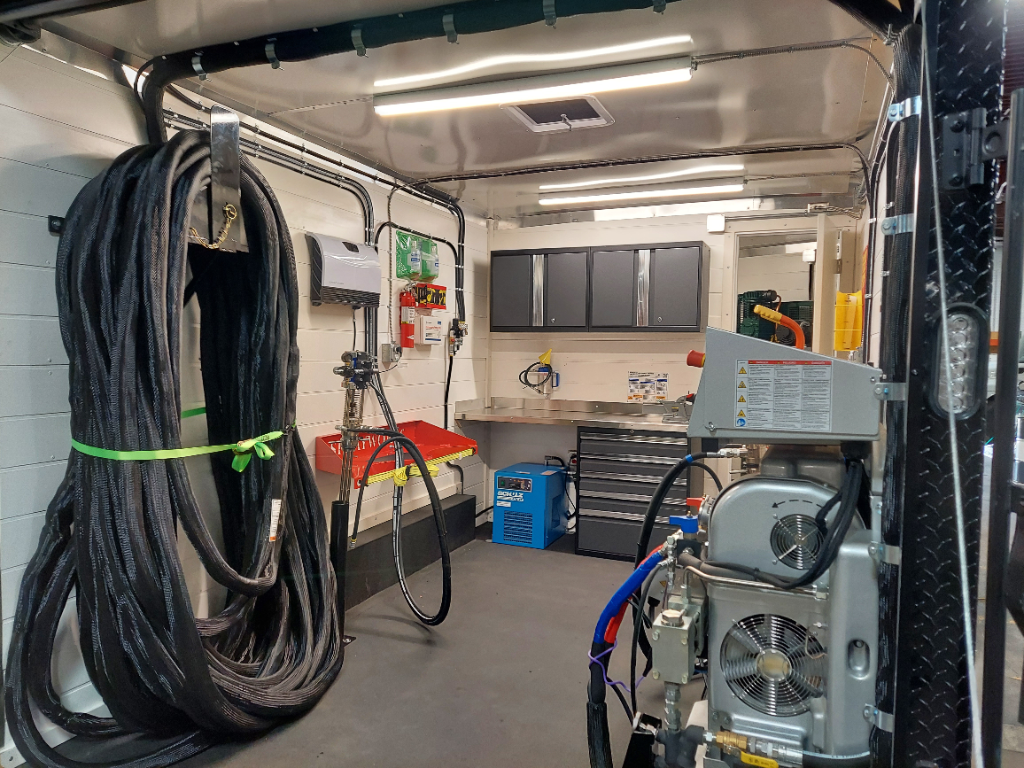
Flooring inside a spray foam rig is not just something to stand on.
- It becomes part of a system exposed to:
- Heat
- Moisture
- Chemical exposure
- Constant temperature cycling
Materials that perform well in buildings often fail in rigs because they are placed into a closed, high-energy environment.
WHERE RUBBER FLOORING IS COMMONLY USED
- Rubber coin and tread flooring is widely used in:
- Enclosed trailers
- Box truck rigs
- Retrofit builds
- It is popular because it is:
- Slip resistant
- Comfortable
- Easy to install
But these benefits do not account for what happens underneath it.
THE REAL PROBLEM: A SEALED SYSTEM OVER WOOD
Most spray rigs use a plywood subfloor.
- Rubber flooring is typically:
- Fully adhered
- Impermeable
- Installed as a continuous surface
This creates a sealed system where moisture can enter — but cannot escape.
HOW MOISTURE GETS INTO THE FLOOR
- Moisture intrusion is constant in spray rigs:
- Humidity and condensation
- Wet boots and traffic
- Material spills and cleanup
- Temperature swings
Even when the surface appears dry, moisture can remain trapped in the subfloor.
HEAT TURNS MOISTURE INTO PRESSURE
- Spray rigs generate heat from:
- Equipment operation
- Drum heaters
- Solar load
- When trapped moisture is heated:
- It turns into vapor
- Pressure builds beneath the flooring
- The flooring begins to lift
This is not just adhesive failure. It is vapor pressure inside a sealed system.
EARLY WARNING SIGNS OF FAILURE
- Common signs include:
- Bubbling or raised areas
- Soft or spongy spots
- Edges lifting or curling
- Musty odors
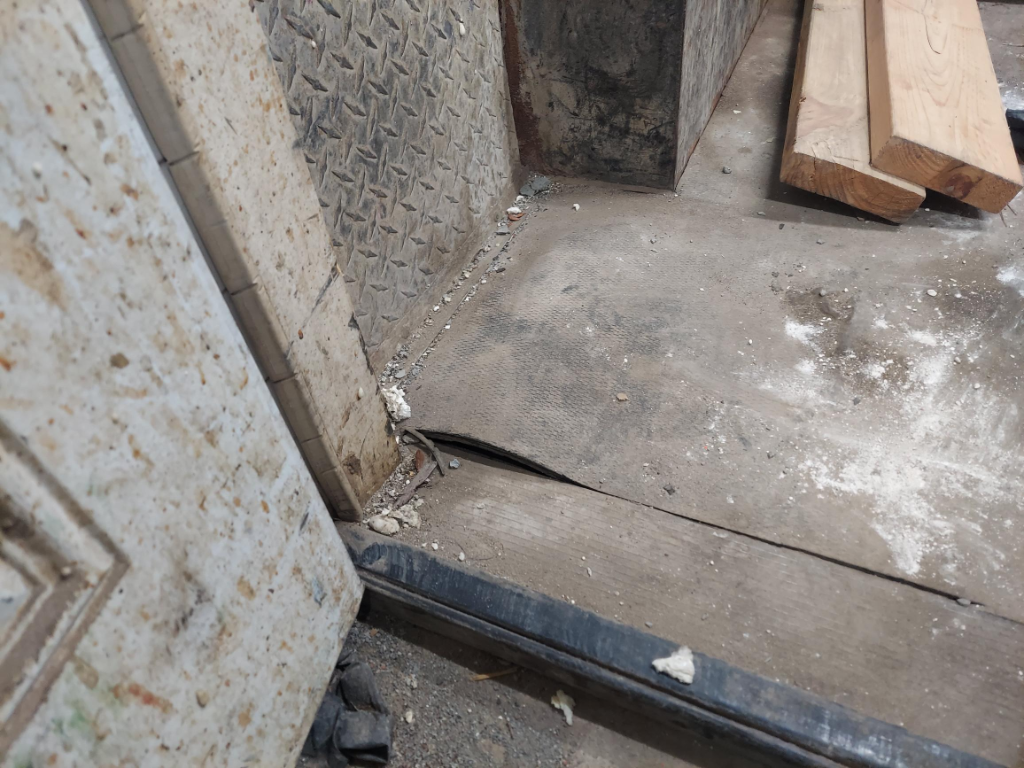
Rubber flooring lifting at the edge of a spray rig floor. Moisture intrusion at the perimeter, combined with heat, creates vapor pressure beneath an impermeable surface, leading to delamination and subfloor damage.
WHAT IS HAPPENING UNDER THE SURFACE
- Once moisture is trapped:
- Wood absorbs and holds moisture
- Heat accelerates breakdown
- Adhesive weakens
- Structural integrity decreases
- Over time, this leads to:
- Delamination
- Rot
- Floor failure
The visible damage is only the surface symptom.
WHY THIS HAPPENS FASTER IN SPRAY RIGS
- Spray rigs create conditions that accelerate failure:
- Higher temperatures
- More moisture exposure
- Frequent thermal cycling
- Chemical exposure
These conditions amplify moisture retention and material breakdown.
WHY THE PROBLEM IS OFTEN MISSED
Rubber flooring hides the issue.
- The surface may appear intact while:
- The subfloor is saturated
- Adhesive has failed
- Structural damage is already progressing
By the time bubbling appears, the damage is advanced.
WHAT WORKS BETTER IN SPRAY RIGS
Flooring systems that perform well do not trap moisture and do not rely solely on adhesive bonding.
Coated Flooring Systems (Polyurea / Epoxy)
- These systems:
- Bond directly to the substrate
- Eliminate trapped layers
- Resist chemicals
- Handle heat and temperature cycling
- Why Coated Floors Perform Better:
- No air gap → no vapor pocket
- No adhesive layer to fail
- Surface is sealed and continuous
- Easier to clean and maintain
This removes the root cause of failure.
BOTTOM LINE
Rubber flooring does not fail on its own.
It fails because it creates a sealed system over a moisture-sensitive substrate.
When heat is introduced, trapped moisture becomes pressure.
- That pressure leads to:
- Delamination
- Structural breakdown
- Subfloor rot
In spray foam rigs, flooring is not just a finish. It is part of the system — and it must be designed accordingly.
Browse 60+ technical articles on spray foam equipment, engineering, and contractor business.
View All ArticlesContact SprayWorks to discuss rig systems, specifications, or to request a quote.
Request QuoteQuestions About Spray Foam Equipment?
Contact SprayWorks Equipment Group to discuss rig systems, configurations, and pricing.