Gun Mounted Recirculation Blocks
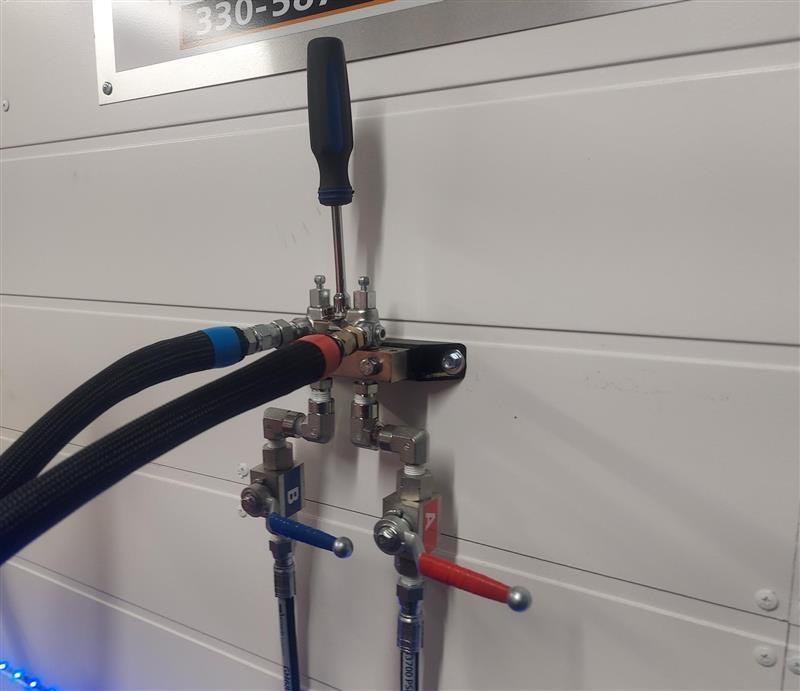
Professional spray foam rigs are complete polyurethane processing systems. Every component in the rig — generator, proportioner, hose system, compressor, and plumbing — affects equipment performance and long-term reliability. One component often overlooked in lower-cost rigs is the recirculation block or recirculation manifold.
SprayWorks includes a recirculation system in every rig platform because it provides an important maintenance and equipment protection function that many simplified rigs lack.
WHAT A RECIRCULATION BLOCK IS
A recirculation block is a manifold installed at the gun end of the heated hose system. It is the valve assembly that controls chemical flow during recirculation, spray operations, and end-of-day purge procedures.
- The recirculation block has valve positions that route chemical flow in three modes:
- Recirculation: Chemical circulates from the machine through the hose to the gun end and back to the drums. No material exits the gun.
- Spray: Chemical is directed from the hose to the spray gun for mixing and application.
- Purge: Chemical is directed back to the supply drums for end-of-day or material change procedures.
Instead of material sitting stagnant inside the proportioner and heated hose lines, the system allows the contractor to continuously circulate material through the system during startup, pauses, and idle periods.
WHY RECIRCULATION SYSTEMS MATTER
Temperature conditioning: At startup, the chemical in the heated hose is below processing temperature. Recirculating through the system allows chemicals to reach setpoint temperature before the operator begins spraying. Starting to spray before chemicals are at temperature produces off-ratio, undercured foam.
Temperature verification at the gun end: With recirculation operating, the operator can verify that chemical temperature at the gun end of the hose has reached setpoint before beginning spray. Standard proportioner temperature gauges measure at the machine — not at the gun end where it matters most.
Idle-period maintenance: During pauses in spray operations (material changes, breaks, repositioning), recirculation keeps chemicals at temperature and prevents material from sitting stagnant in the hose. Stagnant material in a heated hose can develop crystallization issues, particularly on the A-side.
Pressure balance verification: Recirculating with transfer pumps operating allows the operator to verify pressure balance before spraying. Pressure imbalance detected during recirculation can be corrected before it causes off-ratio foam on the job.
End-of-day purging: Recirculation is used at the end of the production day to return material from the hose back to the drums, reducing the amount of material sitting in the hose system overnight.
Equipment protection: Two of the most common spray foam equipment service problems are cold material (causing pump damage from high viscosity cold chemical) and crystallized isocyanate inside hoses. Proper recirculation procedures reduce both risks significantly.
WHY MANY RIGS DO NOT INCLUDE THEM
Many lower-cost spray foam rigs omit recirculation plumbing entirely to simplify fabrication and reduce build cost. However, removing the recirculation capability eliminates an important maintenance tool that experienced contractors rely on to keep rigs operating reliably over time.
Professional production rigs include a recirculation manifold because it allows contractors to condition the system before spraying, maintain temperature during production pauses, and protect hose and plumbing systems between jobs.
MAINTENANCE
The recirculation block should be kept clean, valve seals inspected periodically, and valves verified to operate smoothly. Returning to recirculation during production delays keeps chemical moving and temperature-conditioned — leaving hot chemical stationary in the hose under pressure accelerates internal wear.
SPRAYWORKS APPROACH
SprayWorks installs recirculation blocks as standard equipment on every spray foam rig platform. Training on correct recirculation procedures — startup conditioning, idle-period management, and end-of-day purge — is part of the hands-on operator training included with every rig purchase.
Browse 60+ technical articles on spray foam equipment, engineering, and contractor business.
View All ArticlesContact SprayWorks to discuss rig systems, specifications, or to request a quote.
Request QuoteQuestions About Spray Foam Equipment?
Contact SprayWorks Equipment Group to discuss rig systems, configurations, and pricing.